Projects
-
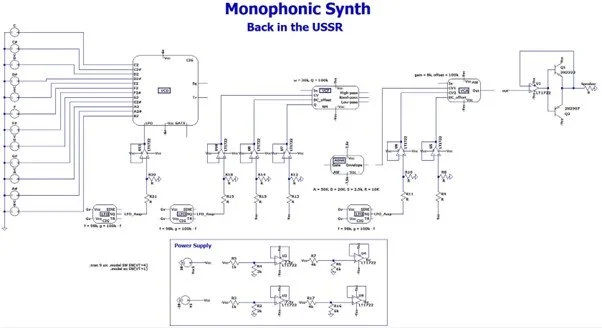
Achieved an 82% in my first-year summer engineering group project which involved designing and building an analogue music synthesizer from the ground up and then writing a full paper on the process along with a video demonstration. My focus was on designing the envelope generator and the voltage-controlled amplifier as well as compiling all the modules into the full and final product.
-
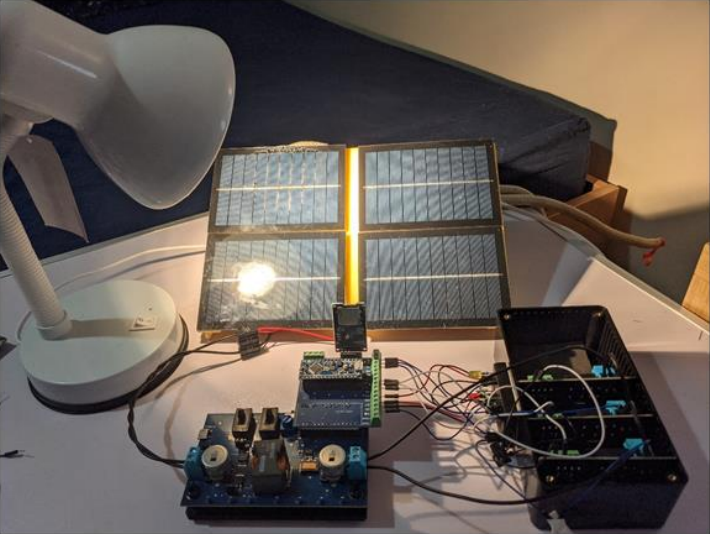
My second-year group design project was to build a mars rover. I was in charge of the energy subsystem which involved designing a solar charging station as well as designing a full battery management system that monitored State of Charge (SoC) and State of Health (SoH).
-
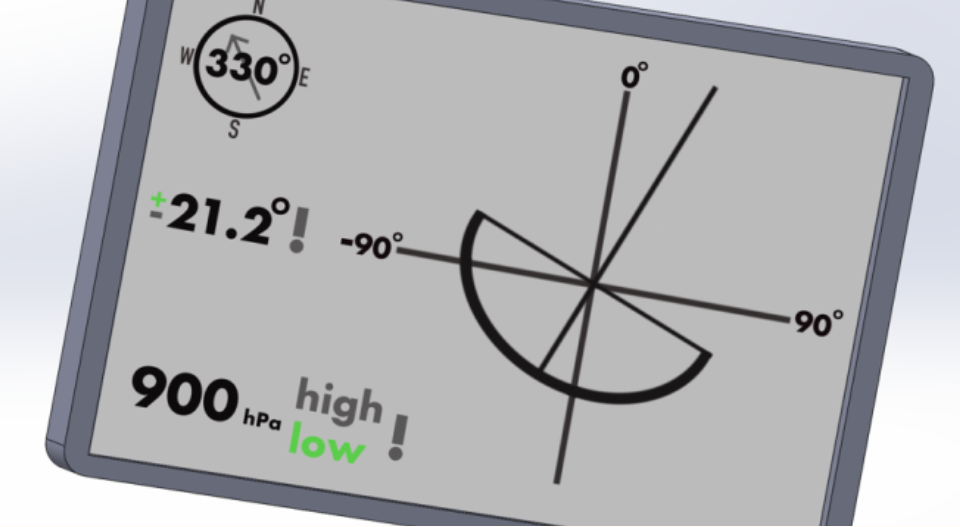
For my third-year embedded systems group project, we were tasked with creating a working Internet of Things (IoT) product. Our idea made use of 9-DoF sensor and an atmospheric pressure sensor to give live feedback on dinghy sailing performance, similar to how the product, Carv, works for skiing.
Using the 9-DoF sensor a small screen on the dinghy tells you your balance, trim, and compass bearing so you can make micro-adjustments as you sail. The pressure sensor shows when there are sudden pressure changes which can signify a gust of wind coming.
After your sail, all the data is uploaded to an app so you can look back on your performance. The app shows your route along the water and you can scroll along the route like a timeline. At each timestamp, you can see your location, instantaneous speed, balance, trim, and air pressure.
-
Due to the work done with the defence industry I cannot discuss many projects in detail.
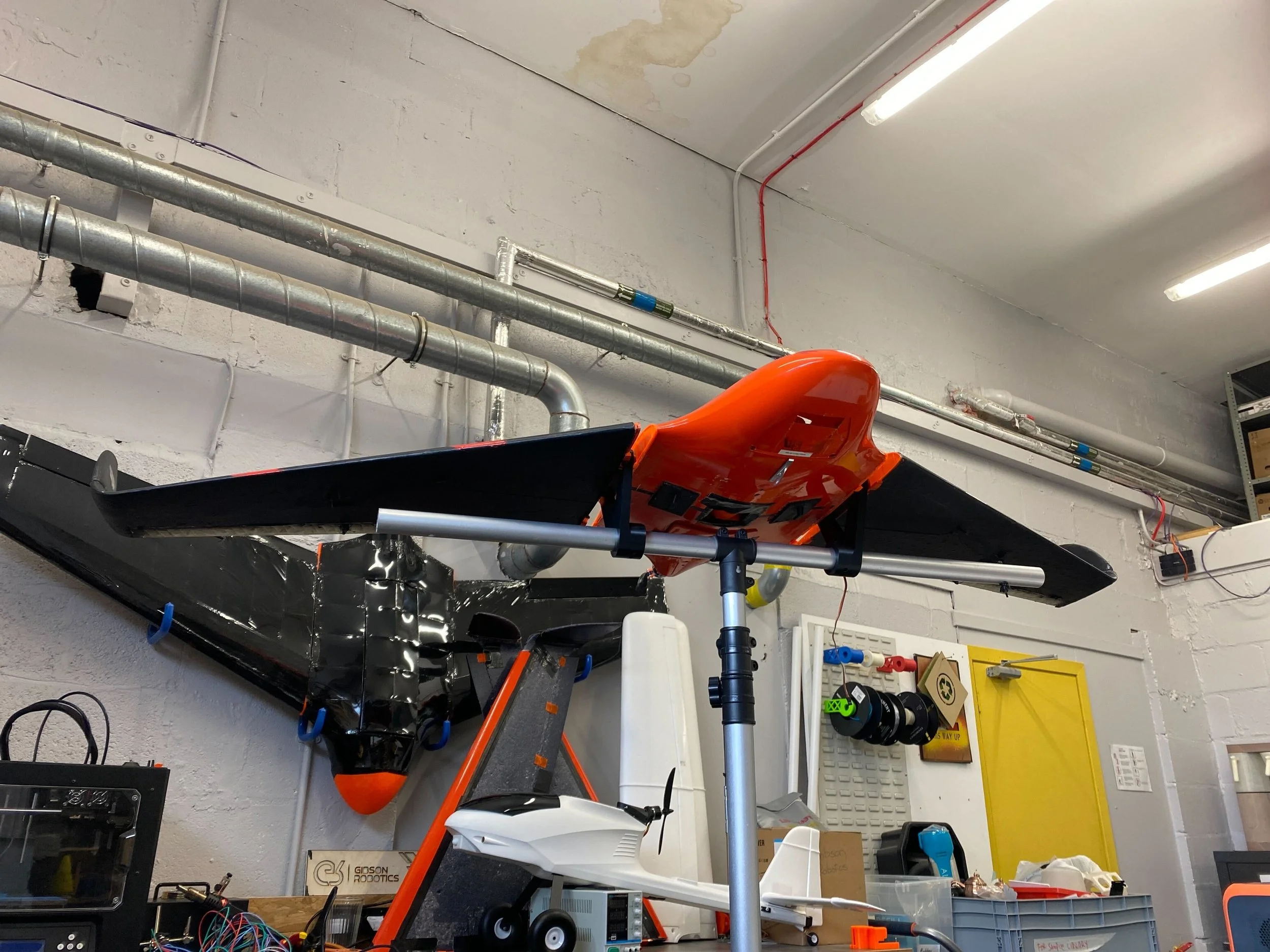
My main project is to build a power management system for the drone so that all the onboard systems can function properly. This also involves designing various control systems and fail-safe features in case other vital systems on the drone fail.
I also do all general electronics works which range from using microcontrollers to control LEDs that meet aviation requirements to designing relays that trigger various mechanical systems.
My ultimate task is to take all of the various circuits that I have built on protoboards and design/build one PCB that neatly collects everything together and helps make the drone look like more of a finished product to investors as opposed to a functional prototype.
By the end of my project, I successfully designed a six-layer PCB the size of two credit cards capable of taking a high-voltage DC battery input and regulating it down to multiple voltage outputs that would go on to power all the drone’s systems. My design achieved an efficiency of 85+%.
-
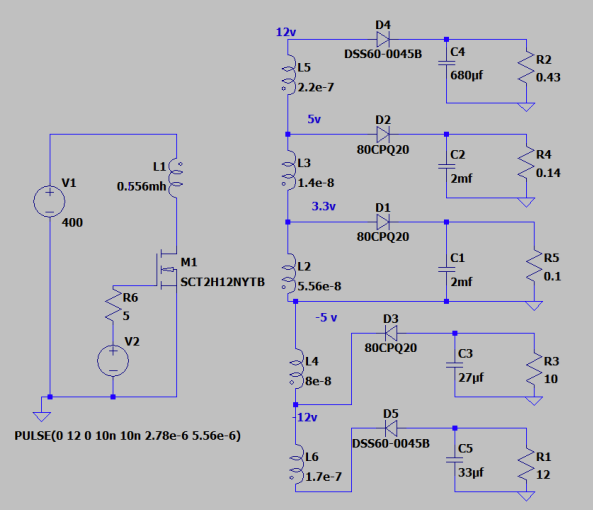
The task for my third year module in power electronics was to design and simulate an ATX power supply with the following aims.
Design and simulate different topologies of power supply, including component selection to achieve a certain efficiency envelope.
• Understand the need for a dynamic model of a power converter when designing a control system to adequately regulate the output.
• Understand the method and limitations of state-space averaging and how it can be used to simplify the control system design of non-linear time-invariant systems such as switch-mode power supplies.
• Learn how to achieve a power factor corrected input to the system
• Design a system that can operate over a wide input voltage range (so that it could be plugged into the mains in e.g. USA and UK without requiring any adjustment).
• Design a system with multiple output voltage rails, and with electrical isolation.
My partner and I achieved over 80% in this coursework and you can read the full report here
-
Abstract
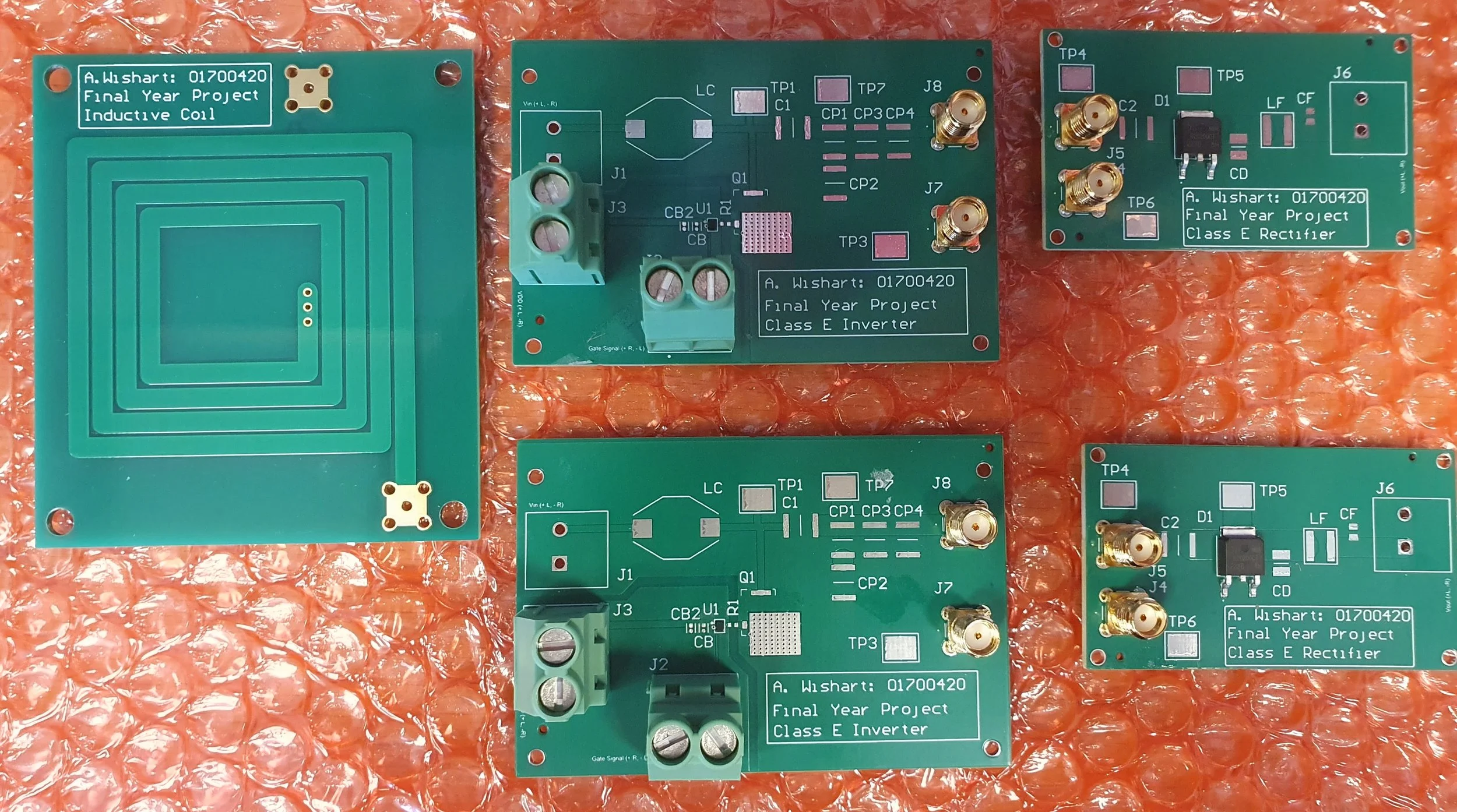
The goal of this project was to design a smaller, lighter, and generally better power adaptor capable of supporting USB-C 100W power delivery output by utilising the combined performance benefits of a resonant class E^2 DC/DC converter and GaN technology at an operating frequency of 13.56MHz whilst using principles of wireless power transfer to achieve a small, credit card sized footprint and easy voltage isolation.
This was primarily done through LTSpice simulations where promising performance was achieved (90+% efficiency) but this failed to be realised in reality due to the complexity of the PCB design and precise requirements for component selection in order to obtain soft-switching. Considerable further work and iteration are required before this concept is ready to leave a lab.